Introduction to Flutter and React Native
As technology continues to advance, the demand for cross-platform app development frameworks has skyrocketed. Two of the most popular frameworks in the market today are Flutter and React Native. Both frameworks offer the ability to build high-quality mobile applications for iOS and Android platforms efficiently. In this article, I will compare Flutter and React Native, exploring their pros and cons, performance, user interface and design capabilities, development speed, community support, and success stories. By the end, you should have a clearer understanding of which framework is the better choice for your next project.
Pros and Cons of Flutter
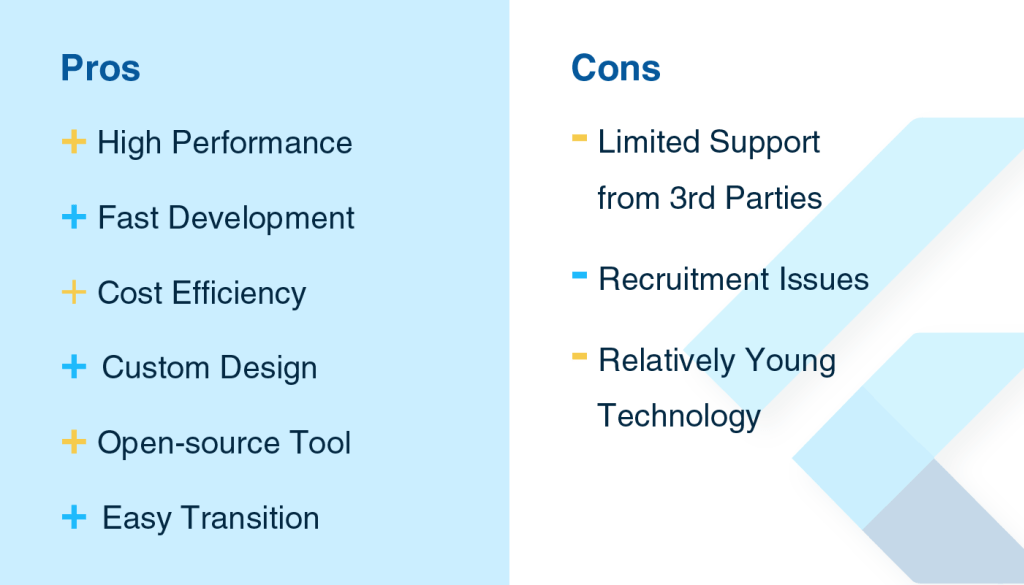
Flutter, developed by Google, is an open-source UI software development kit. One of the biggest advantages of using Flutter is its ability to create visually stunning and highly customizable user interfaces. Flutter uses the Dart programming language, which allows for hot-reload, enabling developers to see changes instantly without rebuilding the entire app. This feature significantly speeds up the development process and enhances productivity.
Another advantage of Flutter is its exceptional performance. Flutter apps are compiled directly to native code, eliminating the need for a JavaScript bridge. This results in faster app performance and a smoother user experience. Additionally, Flutter provides a rich set of pre-designed widgets, making it easier for developers to create beautiful and responsive interfaces without much effort.
On the downside, Flutter is a relatively new framework compared to React Native. As a result, the Flutter community and ecosystem are still growing. While there is a dedicated team at Google supporting Flutter, the availability of third-party libraries and packages may be limited compared to React Native. However, as Flutter gains popularity, more developers are contributing to its ecosystem, which is expected to expand rapidly in the near future.
Pros and Cons of React Native
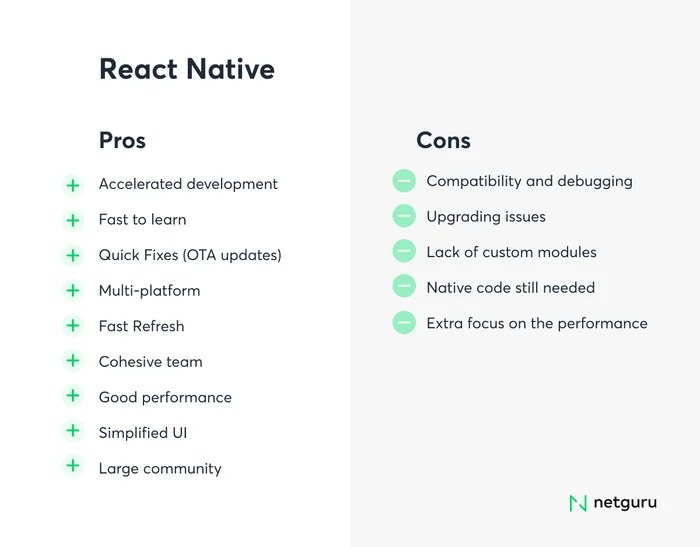
Image – Source
React Native, developed by Facebook, is another widely-used framework for building cross-platform mobile applications. One of the main advantages of React Native is its large and active community. With a plethora of developers contributing to the ecosystem, React Native has a vast collection of third-party libraries and packages, making it easier to find solutions to common problems and speed up development.
Another significant advantage of React Native is its ability to reuse code across different platforms. Since React Native uses JavaScript, developers can write code once and deploy it on both iOS and Android platforms. This not only saves time but also reduces the effort required to maintain two separate codebases.
However, React Native does have some downsides. One of the most notable issues is performance. React Native apps rely on a JavaScript bridge to interact with native components, which can lead to slower app performance compared to Flutter. While efforts have been made to optimize the bridge, there may still be some performance limitations, especially with complex and resource-intensive applications.
Performance Comparison between Flutter and React Native
When it comes to performance, Flutter has a clear advantage over React Native. As mentioned earlier, Flutter apps are compiled directly to native code, eliminating the need for a JavaScript bridge. This results in faster app startup times, smoother animations, and overall better performance. React Native, on the other hand, relies on the JavaScript bridge, which can introduce some performance overhead.
However, it is worth noting that the performance difference may not be significant for all applications. For simple and less resource-intensive apps, React Native can still provide satisfactory performance. The performance trade-off between Flutter and React Native ultimately depends on the specific requirements of your project.
User Interface and Design Capabilities of Flutter and React Native
Both Flutter and React Native offer powerful tools and capabilities for designing user interfaces. Flutter, with its rich set of pre-designed widgets, provides developers with a wide range of options to customize the look and feel of their apps. Flutter’s “hot-reload” feature also allows developers to make real-time changes to the UI, making the design iteration process faster and more efficient.
React Native, on the other hand, leverages the power of CSS-like styling to create visually appealing interfaces. With the help of Flexbox layout, developers can easily create responsive designs that adapt to different screen sizes. Additionally, React Native supports third-party UI libraries such as NativeBase and Material-UI, which provide ready-to-use components and styles, further enhancing the design capabilities.
Ultimately, the choice between Flutter and React Native for UI and design depends on your personal preferences and the specific design requirements of your project. Both frameworks offer robust tools and libraries to create stunning interfaces, so it’s a matter of choosing the one that aligns with your design goals.
Development Speed and Efficiency Comparison
In terms of development speed and efficiency, Flutter and React Native have their own strengths. Flutter’s hot-reload feature allows developers to see changes instantly, making the development process faster and more interactive. This feature greatly reduces the time spent on rebuilding the app after every code change. Additionally, Flutter’s widget-based architecture enables developers to reuse code and create consistent user interfaces, further enhancing development speed and efficiency.
React Native, with its extensive library of pre-built components, also offers faster development capabilities. Developers can leverage these components to quickly build screens and UI elements, reducing the overall development time. Furthermore, React Native’s “live reload” feature allows developers to see the changes in real-time, similar to Flutter’s hot-reload, making the development process more efficient.
Both frameworks provide efficient development workflows; however, Flutter’s hot-reload feature gives it a slight edge in terms of speed and interactivity. That being said, the development speed and efficiency comparison may vary depending on the complexity and requirements of your project.
Community Support and Ecosystem of Flutter and React Native
Flutter
The community support and ecosystem of a framework play a crucial role in its success and sustainability. Flutter, although relatively new, has been gaining popularity rapidly. Google has a dedicated team working on Flutter, providing regular updates, bug fixes, and improvements. Additionally, the Flutter community is growing steadily, with more developers contributing to its ecosystem. Flutter also has an official package repository called “pub.dev,” which hosts a wide range of packages and libraries for various functionalities.
React Native
React Native, with its backing from Facebook, has a large and active community. The React Native community actively contributes to the framework’s development, creating new libraries, components, and tools. React Native also has a dedicated team that provides regular updates and bug fixes. The framework’s popularity has resulted in a vast ecosystem of third-party libraries and packages, making it easier for developers to find solutions to common problems.
When it comes to community support and ecosystem, both Flutter and React Native are well-positioned. However, React Native’s larger community and more mature ecosystem give it a slight advantage in terms of the availability of resources and third-party libraries.
Case Studies and Success Stories of Apps Built with Flutter and React Native
To understand the real-world impact and capabilities of Flutter and React Native, let’s explore some case studies and success stories of apps built using these frameworks.
Flutter Case Studies
1. Google Ads: Flutter was used to develop the Google Ads app, which allows users to manage their advertising campaigns on the go. The app showcases Flutter’s ability to create visually appealing and feature-rich interfaces.
2. Alibaba: Alibaba, one of the world’s largest e-commerce companies, used Flutter to create the Xianyu app. Xianyu is a second-hand marketplace app with millions of active users. Flutter’s performance and flexibility were key factors in Alibaba’s decision to choose it for their app.
React Native Case Studies
1. Facebook: It’s no surprise that Facebook, the creator of React Native, uses the framework for its own app. React Native allows Facebook to maintain a single codebase for both iOS and Android platforms, enabling faster development and easier maintenance.
2. Instagram: Instagram, one of the most popular social media platforms, uses React Native for certain parts of its app. React Native’s ability to deliver a consistent user experience across platforms played a significant role in Instagram’s decision to adopt the framework.
These case studies illustrate the capabilities and versatility of both Flutter and React Native. The choice between the two ultimately depends on the specific requirements and goals of your project.
Choosing the Right Framework for Your Project
Now that we have explored the pros and cons, performance, user interface and design capabilities, development speed, community support, and success stories of Flutter and React Native, it’s time to make a decision.
When choosing the right framework for your project, consider the following factors:
- Project requirements: Evaluate the specific requirements of your project, including performance, design, and platform compatibility.
- Development team: Assess the skills and expertise of your development team. Are they more familiar with Dart or JavaScript?
- Community and ecosystem: Consider the availability of resources, third-party libraries, and community support for each framework.
- Time and budget: Evaluate the time and budget constraints of your project. Which framework will allow you to deliver the app within the desired timeline and budget?
By carefully considering these factors, you can make an informed decision and choose the framework that best suits your project’s needs.
Conclusion: Making the Decision between Flutter and React Native
In conclusion, both Flutter and React Native are powerful frameworks for cross-platform app development. Flutter excels in performance, customizability, and hot-reload, making it a great choice for visually stunning and highly interactive apps. React Native, on the other hand, offers a larger ecosystem, code reusability, and a mature community, making it a reliable option for fast development and extensive third-party library support.
Ultimately, the decision between Flutter and React Native depends on the specific requirements and goals of your project. Consider factors such as performance, design capabilities, development speed, community support, and success stories when making your decision. By carefully evaluating these aspects, you can choose the framework that will bring your app to life effectively and efficiently.
If you are looking for a framework with a large and active community, extensive third-party library support, and the ability to reuse code across platforms, React Native may be the better choice for you. To learn more about the benefits of using React Native, click here.
Remember, the choice between Flutter and React Native is not about which one is better overall, but rather which one is better suited for your specific project. Choose wisely and embark on your journey to create amazing cross-platform mobile applications.

 Tagline Infotech
Leave a comment