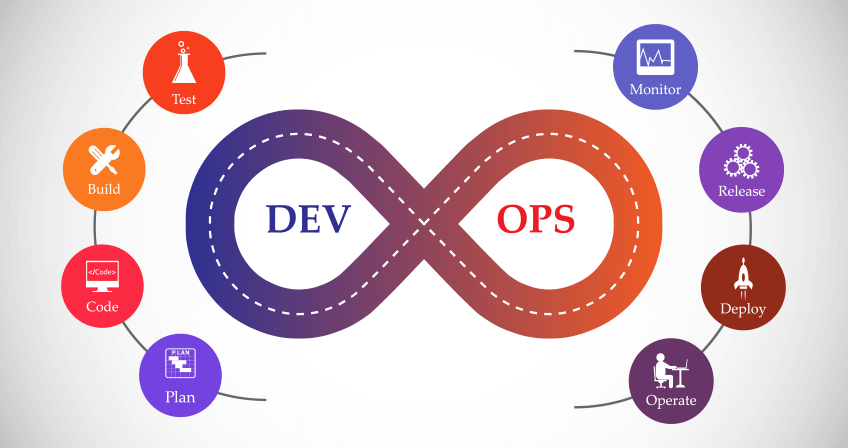
Introduction
The field of software development is constantly evolving, and DevOps has become a crucial aspect of modern software development practices. DevOps is a set of practices that aim to improve collaboration and communication between development and operations teams, resulting in faster and more reliable software delivery.
In this blog, we will compare some of the most popular DevOps tools available in the market – Ansible, Chef, Puppet, and SaltStack. Our goal is to provide an in-depth comparison of these tools, their strengths, and weaknesses, to help you make an informed decision when choosing a DevOps tool for your organization. Whether you are a DevOps engineer, a software developer, or a technology manager, this blog will give you an idea of what to expect from these tools and how they can benefit your team’s workflows.
Comparison of popular DevOps tools: Ansible, Chef, Puppet, and SaltStack
Ansible
Introduction to Ansible:
Ansible is a widely used open-source automation platform that simplifies IT operations by automating tasks such as software deployment, configuration management, and orchestration. Ansible is popular among DevOps professionals because of its simplicity, ease of use, and compatibility with multiple operating systems.
Usage of Ansible in DevOps:
Ansible can be used in DevOps to automate the deployment and configuration of applications, services, and infrastructure. It can also be used to automate repetitive tasks and improve efficiency in IT operations. With Ansible, DevOps engineers can easily manage and deploy applications in large-scale environments, making it a popular choice among DevOps professionals.
Comparison with other DevOps tools:
Ansible is known for its simplicity and ease of use, which sets it apart from other DevOps tools like Chef, Puppet, and SaltStack. Unlike these tools, Ansible does not require complex coding or extensive knowledge of programming languages, making it a suitable choice for DevOps engineers of all skill levels. On the other hand, Ansible may not offer as many advanced features as other DevOps tools, which could be a drawback for organizations that require more sophisticated automation capabilities.
Chef
In this section, we will discuss Chef, a popular DevOps tool used for managing infrastructure as code. Chef provides a powerful platform for automating the deployment, management, and scaling of infrastructure, making it an essential tool for DevOps engineers.
Chef is a client-server based configuration management tool, where the Chef server acts as a central hub for storing configuration data and the Chef client runs on each managed node. This allows DevOps engineers to automate tasks such as provisioning, configuring, and managing servers, eliminating manual processes and reducing the risk of human error.
One of the key features of Chef is its use of recipes, which are written in Chef’s domain-specific language called Ruby. Recipes are essentially scripts that describe the desired state of a system and how to achieve it. This allows DevOps engineers to easily configure and manage their infrastructure, and to ensure that all systems are configured in a consistent and repeatable manner.
When compared to other DevOps tools, Chef is known for its advanced functionality, scalability, and ease of use. Chef is an ideal tool for organizations with large, complex infrastructure, and its robust community of contributors provides a wealth of knowledge and support.
However, Chef can also be more difficult to learn and use compared to other DevOps tools, making it a better fit for experienced DevOps engineers rather than beginners. Additionally, Chef’s focus on large and complex infrastructure can make it less suitable for smaller organizations with simpler needs.
Puppet
Puppet is a widely used DevOps tool that helps automate infrastructure management tasks. It is designed to manage and configure servers, applications, and services in a consistent and repeatable manner.
One of the key features of Puppet is its agent-master architecture, which allows administrators to manage their infrastructure from a centralized location. The Puppet agent is installed on each node, and it communicates with the master server to receive configuration updates and execute tasks.
In terms of usage, Puppet can be used to manage a variety of DevOps tasks such as software installation, configuration management, and service orchestration. Additionally, Puppet has a large community of users and a comprehensive library of modules that can be used to automate common DevOps tasks.
When compared to other DevOps tools like Ansible and Chef, Puppet has a more comprehensive set of features for managing complex infrastructure. However, this complexity can also be seen as a disadvantage, as the tool may have a steeper learning curve for new users.
Overall, Puppet is a powerful DevOps tool that can be used to manage large, complex infrastructures. Its agent-master architecture and comprehensive library of modules make it a popular choice for organizations looking for a robust DevOps solution.
SaltStack
SaltStack is a powerful DevOps tool that helps automate infrastructure management and configuration management. SaltStack provides a centralized management platform to manage large-scale infrastructures, including cloud, physical, virtual, and containerized environments.
SaltStack’s main features include:
- Remote execution and automation: SaltStack enables remote execution of commands and scripts on multiple systems simultaneously, making it easy to manage large-scale infrastructures.
- Configuration management: SaltStack provides an easy-to-use configuration management system that helps ensure consistency and compliance across the infrastructure.
- Event-driven automation: SaltStack has an event-driven automation framework that allows for real-time reactions to events and changes in infrastructure.
- Scalability: SaltStack is designed to be highly scalable, making it ideal for large-scale infrastructures.
When compared to other DevOps tools such as Ansible, Chef, and Puppet, SaltStack stands out for its ability to manage large-scale infrastructures and its event-driven automation framework. SaltStack also has a strong community and a wide range of pre-built automation modules, making it easy for users to get started with their DevOps projects.
However, SaltStack may not be the best choice for smaller organizations or for those who prefer a more simple and straightforward tool. Additionally, SaltStack has a steeper learning curve than some other DevOps tools, so users may need to invest more time and effort to become proficient with the tool.
In conclusion, SaltStack is a powerful and scalable DevOps tool that is well-suited for managing large-scale infrastructures. It offers a range of features and automation capabilities that can help organizations streamline their DevOps processes and improve infrastructure management.
Conclusion
In conclusion, DevOps has become an essential part of software development in recent years. The popularity of DevOps has resulted in the emergence of various tools, including Ansible, Chef, Puppet, and SaltStack. Each of these tools has its unique features and can be used to achieve specific goals in DevOps.
Ansible is a simple and straightforward tool that is easy to use and understand. Chef is a more complex tool that offers a wide range of functionality, making it suitable for large-scale enterprise environments. Puppet is a tool that provides a high degree of automation and can be used for infrastructure management. SaltStack is a highly scalable tool that is suitable for cloud-based infrastructure.
When choosing a DevOps tool, it is essential to consider your specific needs and requirements. The size of your infrastructure, the complexity of your environment, and your team’s expertise are all factors that should be taken into consideration.
In conclusion, investing in a good DevOps tool can significantly improve your software development process and make your operations more efficient. If you’re looking for professional DevOps services, Hire DevOps Developers can help ensure that you choose the right tool for your needs and make the most of your investment.

 Tagline Infotech
Leave a comment